
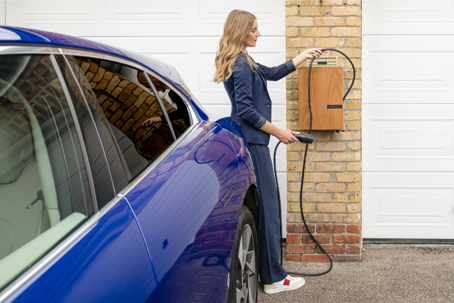
It’s great that you want to be part of the electric revolution. “How long will it take to charge an electric car?” is one of the first concerns on everyone’s mind when thinking about switching. It’s a legitimate worry, and the response is like many things in the realm of EVs—not a straightforward one-liner. Consider it as asking how long it takes to charge your phone; the wattage of the charger you are using determines the battery capacity. Likewise, the charging time of an electric automobile depends on a number of important elements we will break down for you. Remember too that Princeton Electrical Makeover specialises in safe and flawless portable EV charger installations when you’re ready to enjoy the ease of home charging. We can assist in locating the ideal charging option catered to your requirements. Contact Princeton Electrical Makeover right away for professional guidance and installation services!
Understanding the Basics of EV Charging
What Is An Electric Vehicle (EV)?
Fundamentally, an electric vehicle (EV) is an automobile driven on rechargeable batteries using electric motors instead of a conventional internal combustion engine running on petrol or diesel. You will be plugging your EV into an electrical outlet or charging station to recharge it instead of driving to the gas station. Your EV needs a power source to return to 100%, as your phone does. Charging an electric automobile is effectively pumping electricity into its battery pack, which then drives the motor, running the wheels.
Why Charging Time Vary Significantly?
Let us now get down to the point: why does charging an electric automobile take varying times? Picture trying to fill a bathtub with a garden hose instead of a fire hose. Surely the garden hose will take much more time. The same idea governs electric vehicle charging. The size of the car’s battery (think of the bathtub size), the power output of the charger (the hose size), and how much charge is already in the battery determine how quickly an electric car charges. Later on, we will explore these elements in more depth.
The main elements controlling EV charging time
The speed with which you can charge an electric car is substantially influenced by several factors. Knowing them will help you to see what to expect far more clearly.
Battery Capacity: The Size of Your “Tank”
An EV with a higher battery capacity will naturally take more time to charge an electric car from empty to full, as a car with more petrol will take more time to fill up. Kilowatt-hours (kwh) define battery capacity. Using the same charger, a car with a 75 kwh battery will take more time to charge than one having a 40 kwh battery. Consider kwh as the “capacity” of power your battery can carry.
Power: The “Hose” Size Matters
Charging speed is much influenced by the charger you are using’s power output. Kilowatts (kw) define charger power. A fasterflow of electricity into your car’s battery, resulting from a greater kw rating, lets you charge an electric automobile more quickly. Various charge levels produce different power outputs; we shall address these in the next section.
State of Charge (SoC): How Empty is Your Battery?
The State of Charge (SoC) is the proportion of energy your EV’s battery stores right now. Obviously, charging an electric automobile to full capacity will take more time if your battery is almost completely depleted than if you top off a half-full battery. Like you wouldn’t wait until your petrol tank is bone dry to refill, most EV users do not usually allow their batteries to totally run empty before charging.
Charging Infrastructure: Where Are You Plugging In
The charging time of an electric automobile is largely influenced by the location of choice. Using a conventional wall plug for home charging will be far slower than either a dedicated Level 2 charger or a public DC fast-charging station. The speed with which you can restore the battery of your EV depends much on the infrastructure at hand.
Environmental Factors: Temperature’s Role
Unbelievably, the ambient temperature can also influence the charging speed for an electric vehicle. Both extreme temperatures—hot and cold—can affect charging efficiency and battery performance. Although EV battery management technologies are meant to minimise these impacts, you may find somewhat slower charging times in very hot or very cold environments.
Decoding the Different EV Charging Levels
Knowing the several levels of EV charging available will help one to better grasp charging rates. Consider these as distinct “speeds” of electrical flow.
Level 1 Charging: The Slow Sipper (120v AC)
The most basic kind of electric vehicle charging is level 1. It takes advantage of a 120v AC household outlet by standard. You plug in your toaster or lamp from this kind of socket as well.
Typical Charging Speed and Application Notes
Usually adding just between two and five miles of range every hour of charging, level 1 charging is rather slow. If you drive few kilometres every day, it’s usually enough for plug-in hybrid electric cars (PHEVs) with smaller batteries or for topping off a totally electric vehicle overnight. It can take a very long time to completely charge an electric car, though, if you depend just on Level 1 charging for a fully electric car with a larger battery.
Level 2 Charging: The Everyday Option (240V AC)
Like your clothes dryer or oven, level 2 chargingtakes advantage of a 240v AC plug. This raises the charging pace far above Level 1.
Typical Charging Speed and Use Cases
Depending on the power output of the charger—typically ranging from 3.7 kw to 19.2 kw—and the onboard charger capacity of the car, level 2 chargers can contribute anywhere from 12 to 35 miles of range each hour of charging. Home, business, and public charging stations all use this most common form of charging. It offers a far more sensible approach to running a daily electric car.
Why Princeton Electrical Makeover Recommends Level 2 for Home Charging
Having a Level 2 charger installed at home changes most EV owners’ lives. It guarantees you wake up with a full battery every morning by letting you effectively and conveniently charge an electric car overnight. Princeton Electrical Makeover specialises in the safe and professional installation of Level 2 chargers, thereby offering you a quick and dependable method to charge an electric car in the convenience of your own house. We can evaluate your electrical system and advise on the optimum Level 2 charger for your car and requirements.
Level 3 (DC Fast Charging): The Speedy Refuel
The fastest method to charge an electric vehicle is Level 3, sometimes referred to as DC Fast Charging (DCFC). Bypassing the inbuilt charger, these strong chargers send DC power straight to the battery.
Diving Deeper into Charging Speeds
Let’s examine the technological elements controlling charging speed to really understand how rapidly you could charge an electric car.
Kilowatts (kw): The Unit of Charging Power
As was already indicated, the unit used to gauge a charger’s power output is kilowatts (kw). Faster charging speeds follow from a greater kw rating. Assuming your automobile can handle that much power, a 7 kw Level 2 charger will, in one hour, provide 7 kilowatt-hours of energy to the battery.
Amperage and Voltage: The Electrical Foundation
Electrical current flow is expressed in amps; voltage (volts) is the electrical potential difference. Voltage times amperage produces the power—in watts or kilowatts (Power = Voltage x Amperage). While Level 2 uses 240v and can range from 16 to 80 amps or more, Level 1 charging usually runs 120v and roughly 12 amps. Operating at much higher voltages and currents, DC fast chargers enable a greatly increased power supply.
Understanding Miles Per Hour (MPH) of Charge
Another perspective on charging speed is in terms of “miles per hour” (MPH) of range added to your car. Knowing your driving range growth for every hour you charge an electric car will help you better appreciate your vehicle’s efficiency (miles per kwh) and the charger’s output will affect the MPH.
How Long Does It Actually Take to Charge Various Electric Vehicles?
The particular model and battery capacity will affect the real charging time for an electric automobile. The following are some broad illustrations.
Small Battery EVs
Using a Level 2 charger, EVs with smaller battery packs—say, 30 to 40 kwh—may take 8 to 12 hours to completely charge an electric car. In around 30 to 45 minutes, you might possibly add a notable range (e.g., 80% charge) with a Level 3 fast charger.
Mid-Size Battery EVs
A Level 2 charge for EVs with mid-sized battery packs—say, 60 to 75 kwh—may take anywhere from 10 to 20 hours for a full charge. In 45 to 60 minutes, DC rapid charging may get the battery to 80%.
Large Battery EVs
Larger battery packs—e.g., 90 kwh and above—will naturally cause an electric automobile to charge more slowly. While DC fast charging may take roughly an hour or more to reach 80%, a Level 2 charger could need 12 hours or more for a complete charge.
While the charging pace usually slows down greatly after this threshold, most manufacturers and charging stations advise stopping at roughly 80% charge when utilising DC fast charging to safeguard the long-term health of the battery.
Optimizing Your EV Charging Habits
Developing healthy charging habits can help you to enjoy ownership of an electric vehicle even more.
Charging Overnight: The Most Common Practice
Most EV owners with home Level 2 chargers find that charging an electric car is simplest overnight. Your car is completely charged and ready to drive in the morning; you just plug it in before bed. This uses some locations’ off-peak electricity pricing to perhaps save you money.
Using Public Charging Stations Effectively
Longer travels when you need to rapidly charge an electric car on the road are best served by public charging stations, especially Level 3 fast chargers. If needed, schedule charging stops; also, consider charging etiquette—that is, unplugging once you have achieved the desired power level.
Avoiding Fully Draining Your Battery Regularly
Although EVs are meant to be regularly used, constantly emptying your battery to zero and then fully charging it might, over time, stress the battery. Unless you need the whole range for a particular excursion, it is usually advised to keep your battery charge between 20% and 80% for best battery health.
Advantages of Smart Charging
“Smart charging” capabilities abound in many contemporary EVs and chargers. These let you choose charge times—that is, to match off-peak hours—monitor your charging status from a distance using a smartphone app, and even maximise charging depending on your electricity tariffs. Charging an electric automobile is thus even more affordable and handy.
The Future of EV Charging Technology
The field of electric vehicle charging is always changing and holds fascinating developments just waiting.
Faster Charging Technologies Ahead
Development of even quicker charging solutions that could drastically cut charging times in the future is in progress by manufacturers and researchers. The ultra-fast charger’s capabilities of adding hundreds of miles of range in just minutes may find general acceptance.
Wireless Charging: The Untethered Future
Wireless EV charging promises that you can just park your car over a charging pad and have it start charging instantly. This concept might provide a more seamless and practical approach to charging an electric car, even in its early years.
Advanced Battery Technologies Affecting Charging Speed
Faster charging will also rely critically on developments in battery technology itself. Shorter charging periods follow from the development of new battery chemistries and designs that can receive and release energy more quickly.
Portable EV Chargers: Convenience on the Go
In cases when a fixed charging station is not easily accessible, you may have to charge an electric automobile sometimes. Portable EV chargers thus become quite useful.
What are portable EV chargers?
Basically, Level 1 or Level 2 chargers, portable EV chargers, are easy to carry about and plug into appropriate outlets. They present a flexible charging solution for several contexts.
Benefits of Having a Portable Charger
When on holiday, visiting friends or relatives without dedicated charging, or in an emergency, a portable charger can give peace of mind. Though it may be slower than a dedicated home or public fast charger, it lets you use existing power outlets to charge an electric automobile.
Princeton Electrical Makeover: Your Partner for Portable EV Charger Installation
Although portable chargers provide flexibility, it’s important to make sure you have the right and safe electrical setup at home so you can use them. To properly fit your portable EV charger, Princeton Electrical Makeover can evaluate the electrical system in your house and install the required outlets and cabling, therefore offering you a handy backup solution to run an electric vehicle.
Dealing With Typical Misconceptions About EV Charging
Let’s dispel some typical misconceptions around charging an electric automobile.
Myth: Charging Too Slowly for Daily Use
Level 2 charging at home offers enough overnight charge to keep your EV battery topped off for most daily commutes and errands. For longer distances, when you need a quick charge for an electric car, public fast chargers are increasingly accessible.
Myth: You Only Charge from Particular Stations
While public charging stations are crucial, a regular outlet, Level 1 or a professionally fitted Level 2 charger will allow you to charge an electric car at home. Furthermore, some hotels and many businesses provide charging choices. The continually growing charging infrastructure makes it simpler than ever to locate somewhere to charge an electric automobile.
Myth: Charging Costs More Than Using Gas
Many times, especially when utilising off-peak energy rates, the cost of electricity to charge an electric automobile is less than the cost of petrol for a comparable internal combustion engine vehicle. Although the cost of electricity varies, driving an electric vehicle frequently pays less overall per mile.
The Cost of Charging an Electric Car
For owners of electric vehicles, knowledge of charging economics is crucial.
Comparing Electricity Costs to Gasoline Costs
Your local electricity rates and the quantity of energy you need to replace will determine the cost to run an electric car. Multiplying your power rate (per kwh) by the quantity of kwh required to charge your battery will often help you to figure the cost per charge. With EVs, comparing this against the cost of running a petrol tank for a comparable driving range usually shows notable savings.
Factors Affecting Charging Costs
The time of day you charge (off-peak rates are typically lower), whether you are charging at home or a public station (public charging can occasionally be more expensive), and your power provider’s pricing structure can all affect your EV charging expenses.
Potential Savings from Owning an EV
Apart from the possible savings on “fuel,” EV users gain from reduced maintenance expenses (fewer moving components than petrol engines) and possible government incentives or tax credits for installing a home charger. Long term, running and owning an electric vehicle can usually be more affordable.
Optimal Charging Practices for Longevity
As was already indicated, your battery’s lifetime can be extended by avoiding extreme states of charge, consistently draining to zero or charging to 100%. Many electric vehicles include built-in software designed to stop you from completely draining or charging the battery, therefore preserving it.
Understanding Battery Degradation
EV batteries will have some slow degradation over time and with use, much like other batteries. Their capacity to retain a charge may drop somewhat. Manufacturers usually provide extensive guarantees on their batteries, though, and the rate of degradation is usually less than many would have guessed.
The Role of Battery Management Systems
Advanced Battery Management Systems (BMS) found in electric vehicles track and control the temperature, voltage, and charging/discharging rates of the battery. Maximising battery performance and increasing battery lifetime depend critically on the BMS.
Choosing the Right EV Charger for Your Needs
Your driving style and personal situation will determine which suitable EV charger you need.
Assessing Your Driving Habits
Think about how often you have to make longer trips and how many miles you usually travel each day. If you generally drive short distances, a Level 2 charger at home could be plenty. If you often travel great distances, access to public fast-charging stations will be increasingly crucial.
Thinking About the Electrical Layout of Your Home
Examining your home’s electrical system will help you to be sure it can manage the extra load before installing a Level 2 charger. This could need adding dedicated circuits or changing your electrical panel. A comprehensive examination and guaranteed safe and compliant installation are made possible by Princeton Electrical Makeover.
Why Professional Installation Counts?
Level 1 chargers can be utilised with regular outlets; installing a Level 2 charger calls for correct wiring and electrical knowledge. Choosing a skilled electrician, such as Princeton Electrical Makeover, guarantees that the work is done safely and in accordance with codes, so safeguarding your house and car.
Safety First: Crucial EV Charging Guidelines
Charging an electric car should always be the first concern for safety.
Leveraging Certified Charging Equipment
Always use certified equipment and charging wires from reliable safety authorities. Steer clear of frayed or broken cables.
Staying Away from Circuit Overload
Especially if you are using Level 1 charging on a circuit already running other high-power appliances, be aware of the electrical capacity of your house and avoid overloading circuits when charging your electric vehicle.
Using Manufacturer Guidelines
Always follow the charging instructions and guidelines supplied by the charger manufacturer and your EV manufacturer.
Accepting the Electric Future with Assurance
How then should one charge an electric car? How long? As you already know, the response is complex and dependent on battery capacity, charger power, and other variables. But the switch to electric driving becomes smooth and sensible when one understands the various charging levels and can readily charge an electric car conveniently at home with a Level 2 charger (which Princeton Electrical Makeover can professionally install for you!). Growing public fast-charging infrastructure makes longer EV trips more practical. Electric transport is the way forward; with the correct charging systems in place, you can confidently welcome this fascinating technology. Princeton Electrical Makeover is your first choice for dependable, professional portable EV charger installations that fit your lifestyle and guarantee you can always effectively charge an electric car. Get in touch right now to go towards a greener, more sustainable driving experience and to go over your EV charging needs! Call us now at (609) 834-5524.
Common Questions (FAQs)
1. Can I use a regular extension cord to charge my electric car?
No, it’s highly discouraged. Regular extension cords can overheat and provide a major fire risk since they are not made to meet the high current needs of EV charging for prolonged periods. Use the charging wires that came with your EV or approved EV charging cables always.
2. Will regular fast charging ruin my EV battery?
Although DC rapid charging can be handy, compared to Level 2 charging, it stresses the battery more. Modern EVs do, however, feature advanced battery management technologies meant to lessen this. It’s usually advised to use Level 2 charging and save fast charging for when you need a quick top-up on demand.
3. How can I find out the kind of charger my electric vehicle requires?
Your EV manufacturer will list the kinds of chargers that fit the charging port of your car (e.g., Tesla proprietary, CCS, CHAdeMO). For DC fast charging and Level 1 and Level 2 charging, most newer EVs in North America rely on the CCS (Combined Charging System) connector. Though they often come with adapters, Tesla cars feature their own connector.
4. Suppose I live in an apartment block? Can I still charge an electric vehicle?
Although it can be more complicated, charging in apartment buildings is becoming somewhat prevalent. A few buildings include shared electric vehicle charging facilities. You can also look at public charging choices close to your house or talk about charging choices with your building management.
5. Usually, how expensive is it to install a Level 2 charger at home?
Factors include the type of charger, the degree of electrical work required—e.g., panel improvements, running new circuits—and local labour prices can affect the cost of installing a Level 2 charger at home. For a realistic quotation, it’s advisable to obtain a quote from a licensed electrician such as Princeton Electrical Makeover.
The post How Long Does It Take to Charge an Electric Car? Charging Speeds Explained appeared first on Princeton Electrical Makeover.